PA Needs Teachers: How Philadelphia Is Turning a Crisis into a Blueprint for the Nation
Pennsylvania’s teacher pipeline is in crisis—and Philadelphia sits at the center of both the challenge and the response.
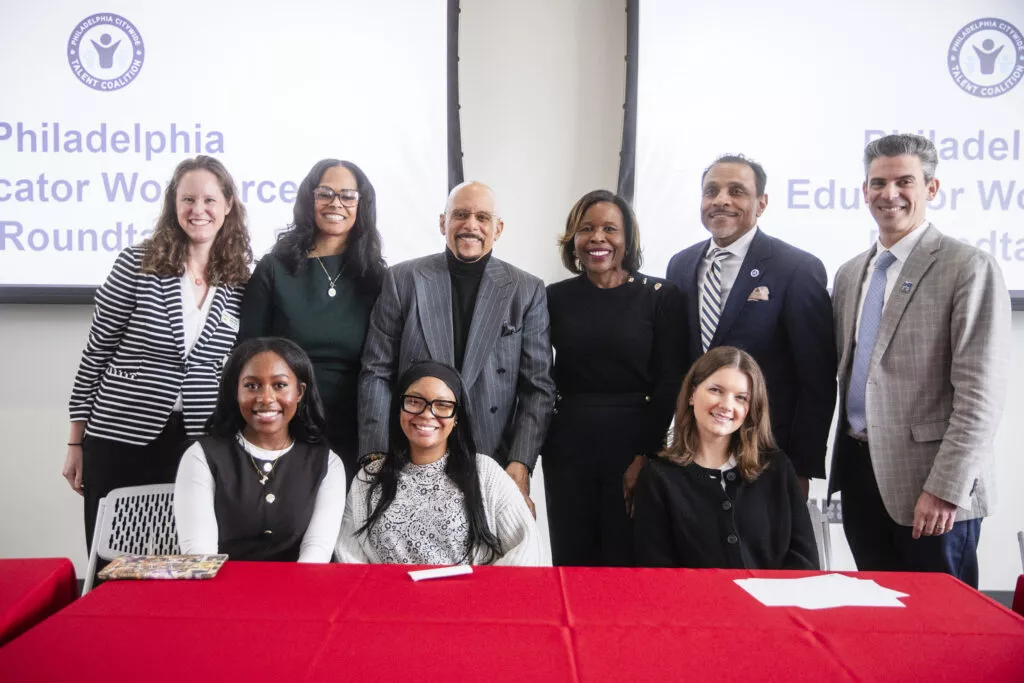
At the recent “PA Needs Teachers” convening at Temple University’s College of Education and Human Development, educators, policymakers, and aspiring teachers gathered to confront stark realities: a 50% drop in Philadelphia educator-preparation enrollment since 2011, a 70% statewide decline in certified teachers, rising reliance on emergency permits, and hundreds of unfilled classroom positions across the City’s district and charter schools.
Despite these challenges, the convening highlighted innovative, evidence-based solutions taking root across the city—from high school teaching career programs and paid student-teaching stipends to registered apprenticeships and “grow-your-own” pipelines. Together, they offer a roadmap for rebuilding the profession.
Speakers emphasized three urgent priorities:
- Creating debt-free, clearly aligned pathways into teaching
- Fully leveraging state and workforce funds, including stipends and apprenticeships
- Investing in teacher retention, from financial incentives to mentorship and career supports
Naming the Crisis — and the Opportunity
Laura Boyce, Executive Director of Teach Plus Pennsylvania and a former high school teacher, underscored the scale of the shortage. 
“Since 2011, enrollment in Philadelphia’s educator preparation programs has declined by 50%, while the statewide number of certified teachers has fallen by over 70%. The state now issues more emergency certificates than regular teaching certificates,” said Boyce.
In Philadelphia, she noted, more than 20% of teaching positions are filled by emergency-permitted educators, alongside 433 vacancies and a 16% attrition rate—rising to 21% for early-career teachers. The impact is greatest in historically underfunded schools and among teachers of color.
Even still, Boyce pointed to major policy progress: a $30 million student-teacher stipend program, a new apprenticeship pathway, emerging youth pipelines, and a revised funding formula directing resources to long-underfunded districts.
Mapping the Pathways: Traditional, “Earn and Learn,” and Beyond
Scott Gaber, Deputy Chief of Talent Initiatives at Elevate 215 and lead organizer of the Philadelphia Citywide Talent Coalition, outlined the evolving certification landscape.
He described four primary routes:
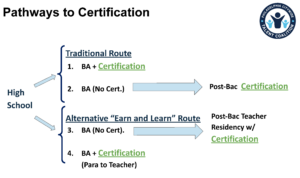
Gaiber highlighted key levers gaining traction in Philadelphia:
- High school teaching career pathways, including SLA Beeber’s Teaching Academy
- The student-teacher stipend, making clinical training more financially viable
- Registered apprenticeships allowing school staff to earn credentials while working
“Philadelphia is on the front edge of innovation,” Gaiber said. However, he cautioned that promising initiatives must move beyond isolated progress to reach system-wide scale.
A District Strategy: Grow, Support, and Retain Teachers
Superintendent Dr. Tony Watlington illustrated how the School District of Philadelphia is addressing shortages through a five-year strategy centered on recruitment, diversity, and retention.
Key priorities include:
- Incentives for hard-to-staff schools and subjects
- Expanding recruitment of teachers of color, especially Black and Latino men
- High school-based preparation programs to elevate the teaching profession early
- Debt-free pathways for paraprofessionals and school staff
The district is also strengthening support for emergency-certified teachers through structured professional learning, instructional coaching, Praxis test preparation, and expanded induction programs.
The Higher Education Lens: Rethinking Preparation
Dr. Monica Sheely, Dean of Temple’s College of Education and Human Development, stressed that teacher-preparation programs must evolve.
“Even as the largest producer of teachers for Philadelphia, Temple has experienced a 32% decline in candidates over the last five years—mirroring a national decline of about 35%—so we know we have to do better and do things differently,” said Dr. Sheely.
She emphasized the need for cohort-based models, year-long clinical experiences, multiple embedded field placements, and research grounded in urban school systems.
Voices from the Pipeline
 Shannon Minarde, a Swenson High School teacher who previously received a student teacher stipend, described the financial strain of balancing full-time coursework with unpaid clinical teaching, calling the stipend a crucial source of stability during a pivotal transition into the profession.
Iman Byrd, a Science Leadership Academy Beeber student and aspiring educator, said hands-on experience as a teaching assistant and mini-course instructor helped build confidence and clarify their path toward teaching.
Aziza Griggs, a Sankofa Freedom Academy teacher and former emergency-permit educator who earned certification through a registered teacher apprenticeship, described the challenge of meeting licensure requirements while teaching full time — and how structured mentorship made certification possible and inspired her to mentor others.
Policy, Advocacy, and the Work Ahead
 Senator Vincent Hughes framed the teacher pipeline challenge as both urgent and solvable, calling for sustained advocacy to secure full education funding and elevate the profession’s status.
If progress in school funding is not matched by investments in the educator workforce, he warned, the gains will fall short. Teaching must be treated as central to economic and civic life—with compensation and preparation reflecting its importance.
A Blueprint Taking Shape
Across sectors, the convening delivered a clear message: the teacher shortage is not inevitable.
Philadelphia’s growing ecosystem of debt-free pathways, apprenticeships, youth programs, and retention supports offers a model for rebuilding the profession. With sustained investment and coordination, the city’s approach could help shape a national blueprint—ensuring more students learn from well-prepared, well-supported teachers in the years ahead.